Logan Lorenz · 13 October 2026
Examining Intertidal Pulse Patterns to Forecast Estuarine Biodiversity Shifts Across Multiple Seasons
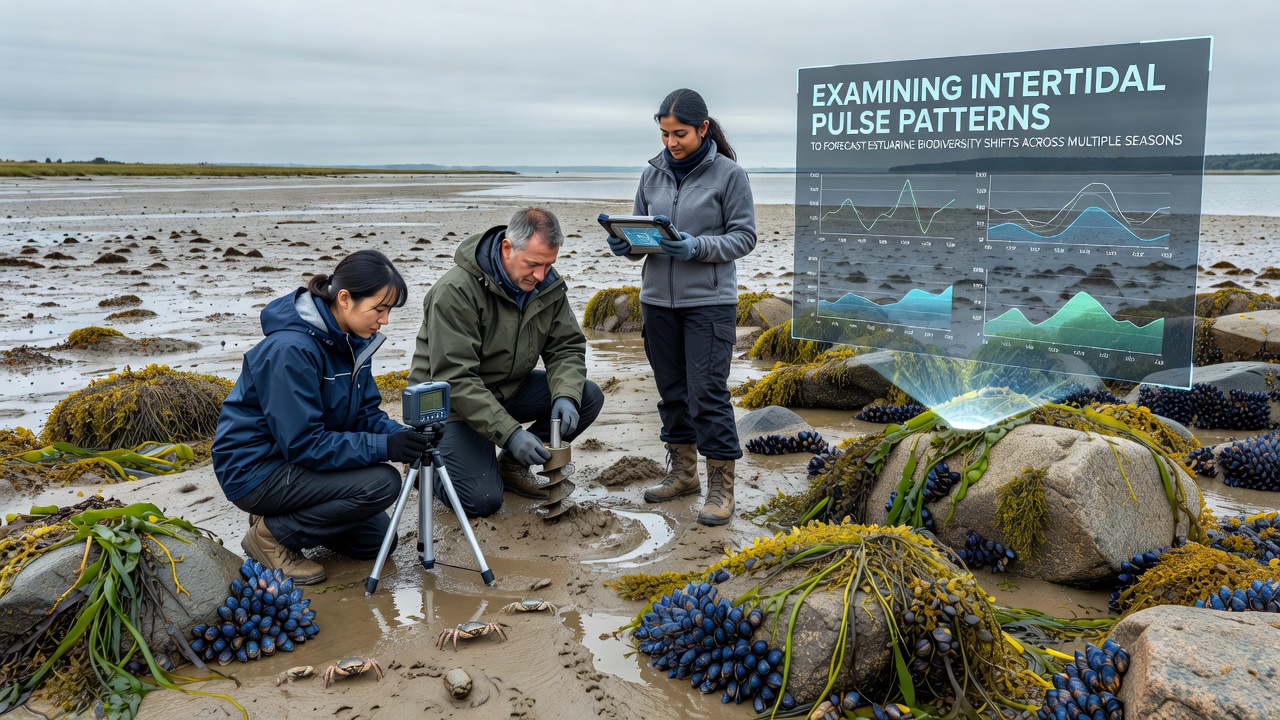
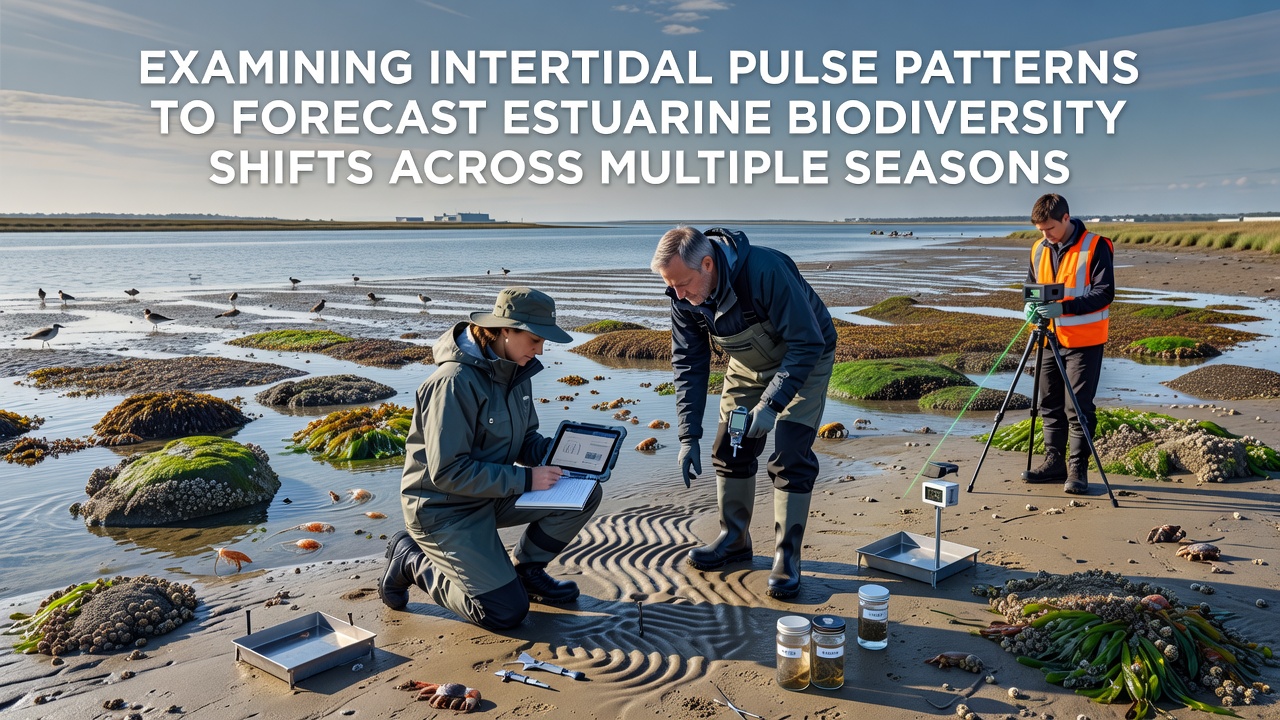
Intertidal pulse patterns represent the rhythmic biological and physical signals that occur in the zone between high and low tides, where organisms respond to tidal cycles through feeding migrations, reproductive events, and metabolic adjustments, and these patterns provide measurable indicators for tracking how estuarine ecosystems respond to seasonal environmental changes. Researchers deploy arrays of pressure sensors, temperature loggers, and acoustic monitors to capture the timing and intensity of these pulses, while satellite data and drone surveys add spatial context across entire estuaries. The resulting datasets reveal how daily tidal rhythms interact with longer-term seasonal drivers such as temperature gradients, freshwater inflows, and nutrient pulses from upstream watersheds.
Defining Pulse Patterns in Intertidal Habitats
Biologists define an intertidal pulse as a synchronized burst of activity or physiological change that aligns with tidal phase, for example when burrowing crabs emerge during ebb tide to forage or when phytoplankton blooms coincide with nutrient upwelling on incoming tides. Studies conducted in temperate estuaries show that these pulses vary in amplitude and frequency depending on lunar cycles, with spring tides producing stronger signals than neap tides. Data collected over multiple years indicate that pulse timing shifts measurably when water temperatures rise or fall outside historical ranges, creating early warnings of stress on keystone species such as oysters, polychaetes, and migratory shorebirds.
Data Collection Across Seasons
Teams maintain continuous monitoring stations that record parameters every fifteen minutes throughout the year, allowing direct comparison of pulse characteristics from winter lows to summer highs. In spring, increased daylight and moderate temperatures often amplify reproductive pulses among invertebrates, whereas autumn brings stronger storm-driven mixing that redistributes sediments and alters pulse visibility. Winter months typically show compressed activity windows because of colder water and reduced metabolic rates, yet certain fish species exhibit heightened movement pulses during brief warm spells. Observers note that combining in-situ sensors with environmental DNA sampling strengthens the ability to link pulse strength to actual species abundance rather than relying on visual counts alone.
Linking Pulses to Biodiversity Forecasts
Statistical models trained on multi-season datasets use pulse metrics such as peak timing, duration, and amplitude to predict shifts in species composition. When spring reproductive pulses weaken relative to long-term averages, models project declines in larval recruitment for several mollusk and crustacean populations by the following autumn. Similarly, prolonged summer pulses of hypoxic conditions correlate with reduced diversity indices measured the next winter. These forecasts improve when researchers incorporate river discharge records and regional climate indices, producing probabilistic maps that indicate which estuarine sub-basins are likely to experience the greatest turnover in community structure. One long-term project along the Pacific coast of North America has validated model outputs against independent survey data collected over five consecutive years, demonstrating that pulse-based predictions outperformed traditional temperature-only models in anticipating biodiversity changes.
Regional Examples and Recent Findings
Along the Atlantic seaboard, monitoring programs have documented that intensified autumn pulses of sediment resuspension precede measurable drops in seagrass coverage the following spring. In contrast, European estuaries studied by collaborative networks show that stable winter pulse patterns often precede higher springtime diversity of wading birds that rely on exposed mudflats for foraging. Australian researchers working in subtropical systems report that summer flood events create distinct pulse signatures in salinity that forecast rapid colonization by opportunistic polychaete species within weeks. In October 2026, several of these regional programs plan to release synchronized datasets that will allow cross-hemisphere comparison of pulse-to-biodiversity relationships, potentially revealing whether certain pulse thresholds operate universally or remain locally specific.
Integration of citizen-science observations with professional sensor networks has expanded geographic coverage without proportional increases in cost, as volunteers photograph organism presence at fixed intertidal markers during predictable low-tide windows. These photographic records help calibrate automated image-recognition algorithms that detect pulse events from time-lapse cameras. Government agencies in both North America and Europe have begun incorporating pulse-derived indicators into routine estuarine health reports, while academic groups continue refining machine-learning approaches that weight different pulse variables according to their predictive power for specific taxonomic groups.
Conclusion
Continued refinement of intertidal pulse monitoring offers a practical pathway for anticipating biodiversity shifts before they become irreversible, because the signals appear weeks to months ahead of measurable population changes. As datasets lengthen and models incorporate additional variables such as ocean acidification trends and land-use alterations, forecast accuracy is expected to rise. The approach remains grounded in observable physical and biological rhythms rather than abstract indices, giving resource managers concrete metrics they can track across seasons and use to prioritize conservation actions in estuaries worldwide.